
Virtual Reality (VR) is not just revolutionising the way one teaches—it’s reshaping the how and why behind nursing education. By reducing the need for physical resources, travel, and repetitive use of disposable medical supplies, VR offers a greener, more efficient alternative to traditional training methods. It’s a powerful tool for creating immersive, repeatable, and risk-free clinical simulations that are not only effective but environmentally conscious.
From cutting down carbon footprints to making healthcare training more accessible and equitable, VR is proving that innovation and sustainability can go hand in hand. This transformative technology not only revolutionises the way we interact with the world but also significantly reduces environmental impact by creating virtual environments that eliminate the need for physical resources and travel.

By minimising the reliance on traditional methods that often contribute to environmental degradation, such as paper waste and energy consumption in physical classrooms, virtual reality stands out as a sustainable alternative. Furthermore, it enhances educational opportunities by providing immersive training experiences that can be accessed remotely, ensuring that individuals from diverse backgrounds, regardless of their location or socioeconomic status, can acquire essential skills and knowledge in the healthcare sector.
This accessibility is critical, especially in underserved communities where resources are scarce and healthcare professionals are urgently needed. Through realistic simulations, trainees can practice their skills in a safe environment, helping to build confidence without the risks associated with hands-on learning in real-world settings. Additionally, VR fosters collaboration among students and professionals across vast distances, enabling knowledge sharing and teamwork that transcends geographical barriers.
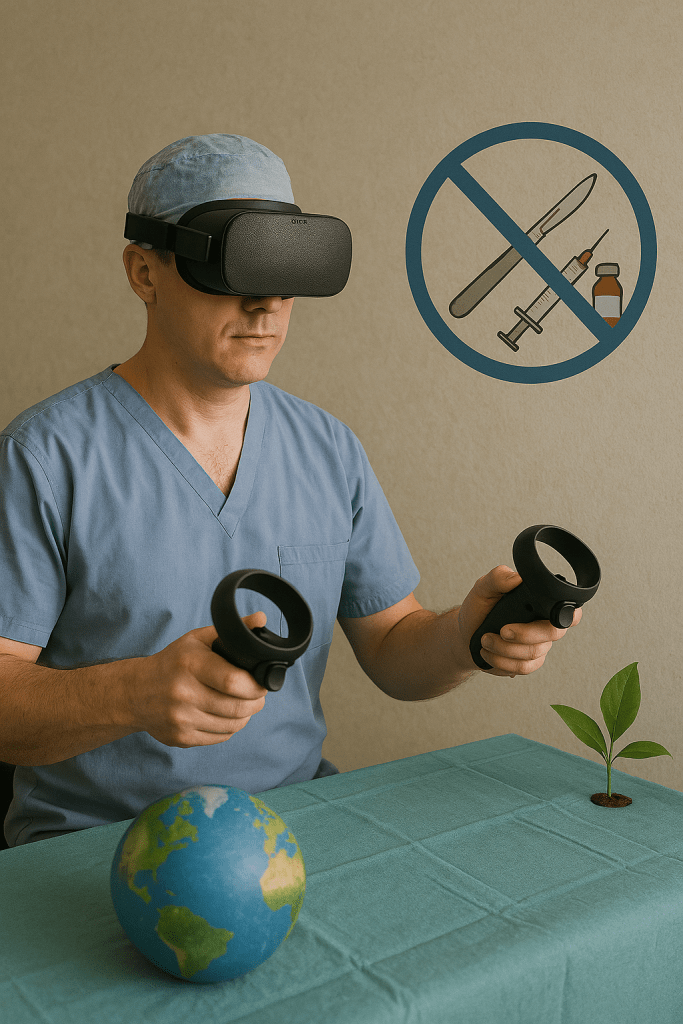
As we continue to explore the limitless capabilities of virtual reality, its ability to merge eco-friendly practices with groundbreaking educational advancements stands as a testament to the potential of modern technology in addressing some of our most pressing global challenges. By investing in virtual reality solutions, we not only step towards a greener future but also cultivate a culture of continuous learning and innovation that benefits individuals and communities alike.
With the ongoing advancements in VR technology, we can anticipate even more significant shifts in how we approach education, healthcare, and sustainability in the years to come, ultimately contributing to a more equitable and responsible world. The challenges we face regarding climate change and educational inequality are vast, but the integration of VR into our strategies for progress offers a promising path forward that combines the power of technology with a commitment to social and environmental responsibility.
 Nurseility
Leave a comment