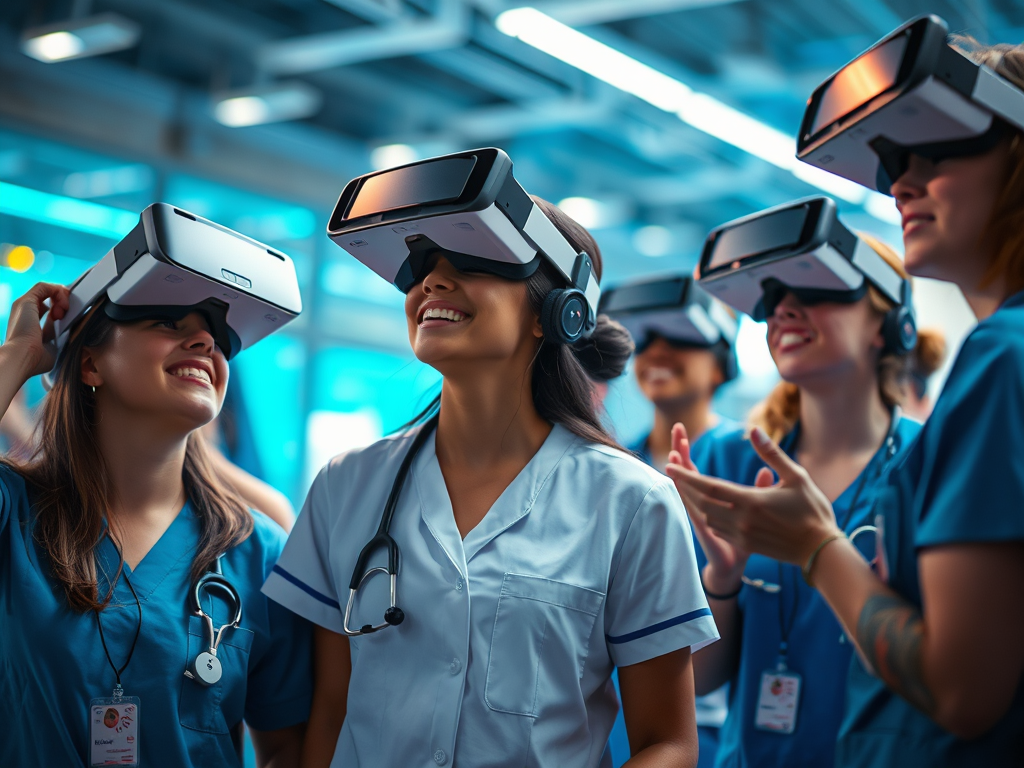
The advantages of employing Virtual Reality in educational contexts are extensive and noteworthy, as the program can be meticulously designed to cater to the individual needs of learners, harmonise with the established curriculum, and accommodate a variety of learning styles.
This tailored approach not only facilitates a more personalised educational experience but also engages students in a manner that conventional methods frequently fail to achieve. By actively engaging learners in the learning process, Virtual Reality captures their attention and encourages them to explore topics with increased enthusiasm, thereby fostering a deeper emotional connection to the material.
Furthermore, by integrating immersive simulations and interactive environments, Virtual Reality substantially enhances the curriculum, rendering complex subjects more accessible and enjoyable for students. For instance, learners may immerse themselves in historical events, witnessing pivotal moments such as the signing of foundational documents or experiencing the complexities of ancient civilisations, which allows them to grasp the significance of history in a vivid, memorable manner. They may also encounter scientific phenomena in real time, such as exploring the solar system or observing chemical reactions under various conditions, which provides a practical framework to understand theoretical concepts that may otherwise seem abstract.

Moreover, nursing students can refine their skills in a secure yet realistic setting, whether it involves practicing breaking of bad news through conversational simulations or honing technical skills in a controlled virtual hospital settings. As they navigate through these virtual realms, students cultivate critical thinking skills, improve information retention, and develop a profound understanding of the material, thereby thoroughly preparing them for real-world applications.
This innovative pedagogical approach not only enriches the educational experience but also promotes collaboration among peers, allowing students to work collectively within these virtual environments, exchanging insights and learning collaboratively, which further elevates their educational journeys. The richness of interaction provided by Virtual Reality fosters not only individual learning but also group dynamics, enhancing problem-solving skills and encouraging teamwork as students embark on challenges together.
In this way, Virtual Reality emerges as a transformative educational tool, situating learners at the forefront of their educational experiences and equipping them with the skills necessary for success in an increasingly complex and technology-driven world.
 Nurseility
Leave a comment