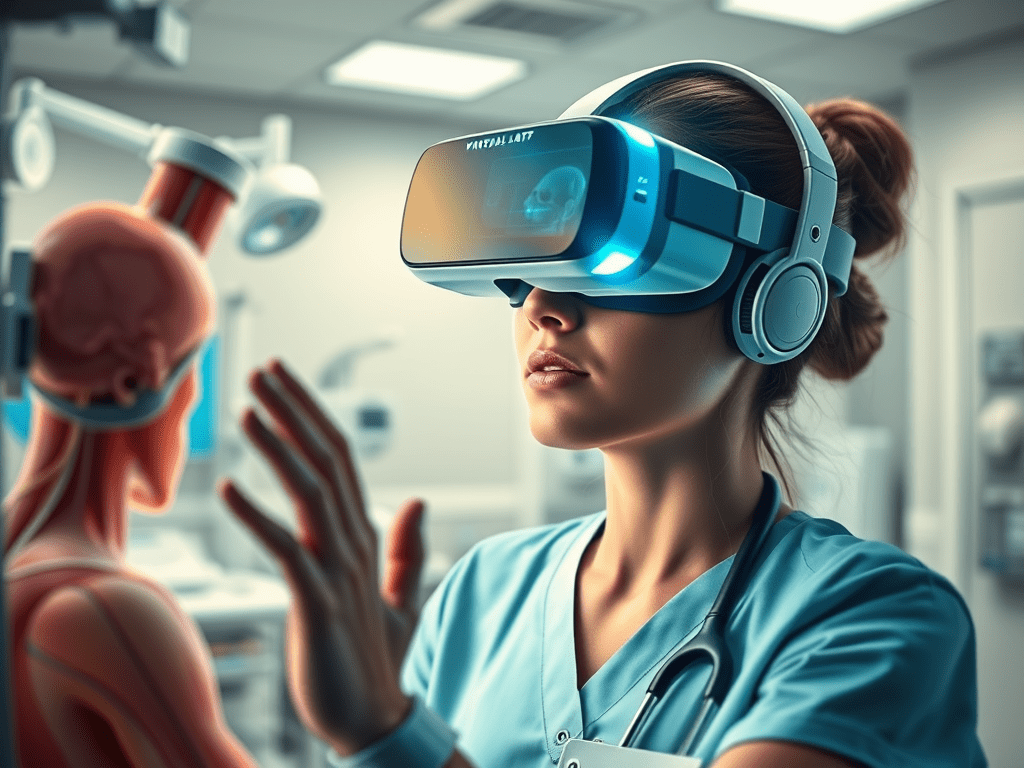
The advantages of using virtual reality (VR) in nursing education are profound, especially in terms of reducing the complexity of understanding difficult case scenarios during theoretical hours. By immersing students in realistic simulations, VR allows them to engage with intricate clinical situations in a controlled environment, fostering better comprehension without the pressure of real-life consequences.
This technology facilitates experiential learning, enabling learners to practice essential skills, such as patient assessment and critical decision-making, in lifelike scenarios that closely mimic actual medical environments. Moreover, VR is capable of providing instant feedback, which is invaluable for students as they can learn from their mistakes and refine their techniques in real time. Additionally, VR can cater to diverse learning styles, improving knowledge retention and ensuring that complex concepts are more accessible. Visual learners, for instance, benefit immensely from the vivid, 3D representations of anatomy and medical procedures, while auditory learners can engage with verbal prompts and instructions.
Through repeated practice in these virtual settings, nursing students can develop their confidence and competence before entering the workforce, allowing them to face patient interactions with a sense of preparedness that traditional methods might not offer. Overall, integrating VR into nursing education not only enhances the learning experience but also prepares future nurses more effectively for the challenges they will face in their professional careers. Summarising the advantages of complexity reduction: it simplifies training, increases accessibility, and improves retention of critical skills, ultimately benefiting patient outcomes.

 Nurseility
Leave a comment