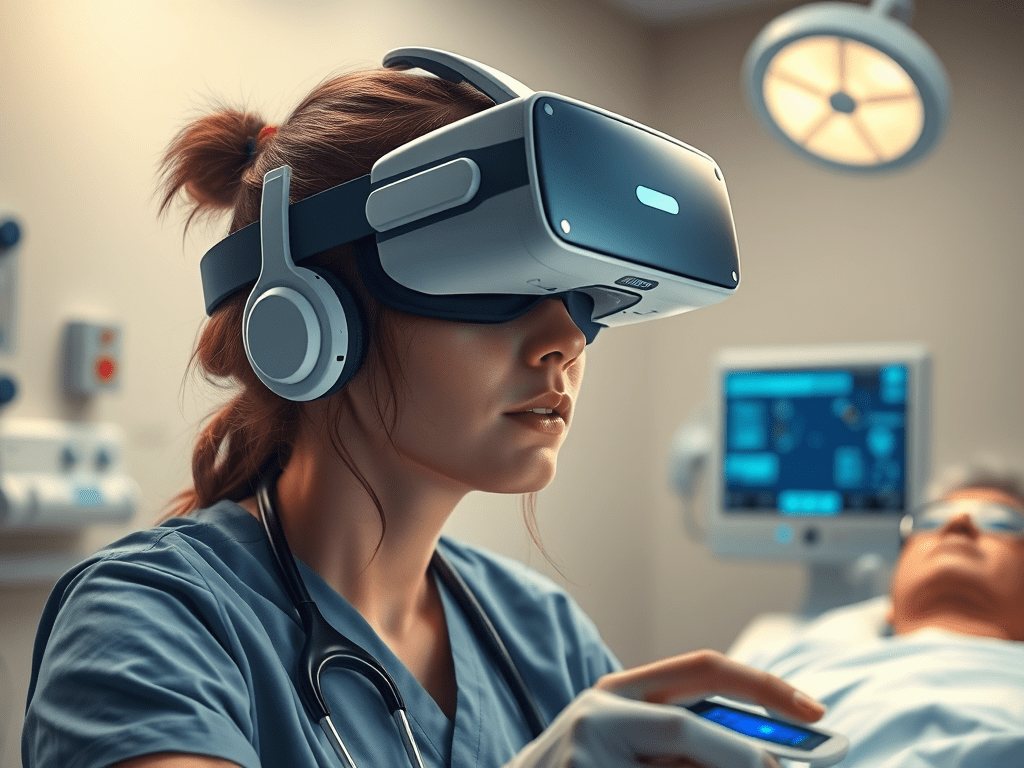
The integration of Virtual Reality (VR) into nursing education presents a transformative opportunity to enhance the assessment of nursing students’ skills during hands-on practice. By utilizing VR technology, educators can create immersive simulations that replicate real-life clinical scenarios, enabling students to practice critical skills without the pressures of a live environment.
This innovative approach allows for comprehensive evaluations of clinical competencies, as students can be observed interacting with virtual patients, making decisions, and responding to dynamic situations in real-time. Moreover, VR can offer a safe space for students to experiment with different techniques and learn from mistakes without risking patient safety. This method not only promotes active learning but also fosters critical thinking and problem-solving skills that are essential in high-stakes healthcare settings.

As VR technology continues to evolve, it promises to become a central tool in nursing education, providing a standardised method for testing skills across various scenarios and ensuring that new nurses are not only knowledgeable but also proficient in their practice. The ability to repeatedly practice complex procedures in a controlled environment also helps to build confidence among students, ultimately leading to improved patient care and better health outcomes.
Furthermore, VR can facilitate remote learning, allowing nursing students in different geographical locations to access the same quality of training, bridging gaps in education and leveling the playing field for aspiring nurses everywhere.
 Nurseility
Leave a comment