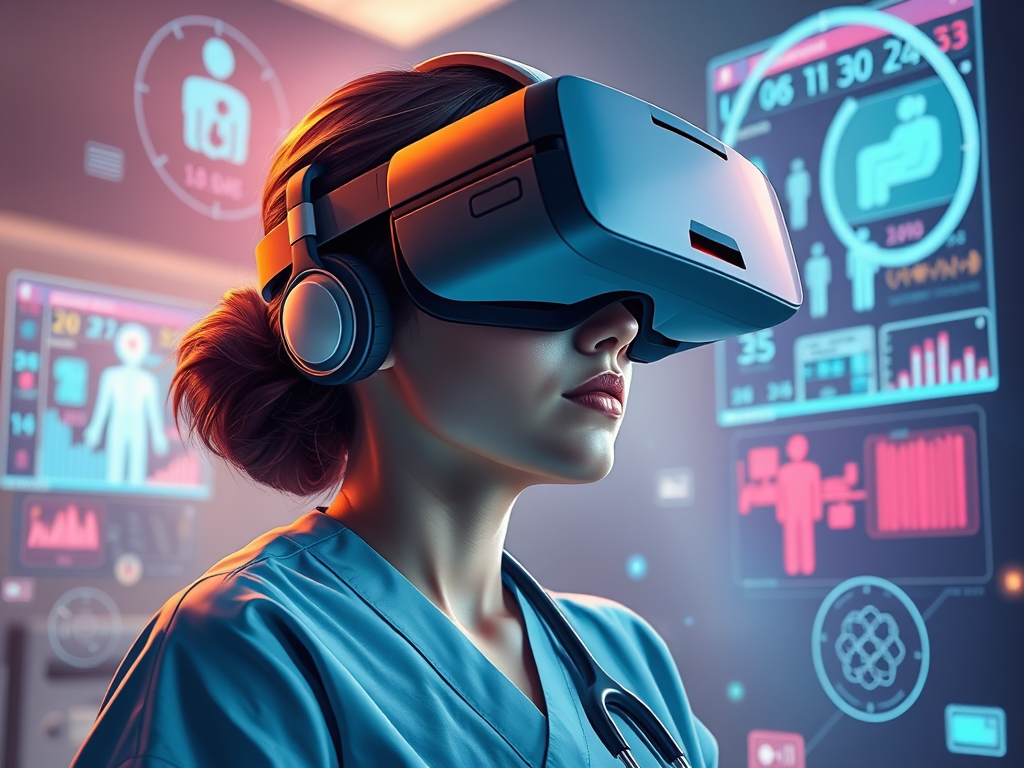
The Power of Dynamic Difficulty in VR Nursing Education lies in its ability to create immersive and adaptable learning experiences that traditional methods cannot provide. By utilising advanced algorithms, VR can assess a learner’s performance in real-time, adjusting the complexity of scenarios to match their individual skill level and learning pace.
This dynamic difficulty not only helps maintain engagement but also ensures that nursing students face challenges that are neither too easy nor too difficult, promoting optimal learning conditions that cater to diverse learning styles.
For instance, a student struggling with patient assessments can encounter more simplified scenarios to build their confidence, while those more advanced can be thrust into high-stress environments that require immediate critical thinking and decision-making to foster quick adaptability. Additionally, VR can simulate a wide variety of clinical scenarios—from routine check-ups to emergency responses—allowing for hands-on practice in a safe environment where mistakes can lead to valuable learning opportunities rather than real-world consequences, ultimately reducing anxiety in students and encouraging exploration.
This extensive simulation of diverse patient interactions enhances not only technical skills but also soft skills such as communication and cultural competence, which are essential for effective nursing practice in our increasingly multicultural society. Furthermore, the collaborative aspect of VR allows students to work in teams within the virtual space, facilitating peer-to-peer learning and teamwork skills that are vital in real healthcare settings, thereby mirroring the interdisciplinary cooperation required in modern medical environments.
The adaptability of VR in addressing various learning curves ensures that education is personalised, enabling educators to track progress and address areas of weakness effectively. By integrating dynamic difficulty, VR nursing education addresses the unique challenges of contemporary healthcare training, enhancing competency, promoting resilience, and preparing students for the complex realities of patient care, thereby revolutionizing how future nurses are trained and setting a new standard for educational excellence in this essential field.

 Nurseility
Leave a comment